What Diners Expect From a Restaurant in 2026
Ask a regular what makes a good visit and they will talk about the food and the people. Ask what makes a bad one and the answers are more practical: waiting for a menu, not understanding a dish, chasing the bill. Those small frictions are what diners now notice. Here are seven expectations that shape a visit in 2026, and what each one means for you.
1. "Let me order when I'm ready"
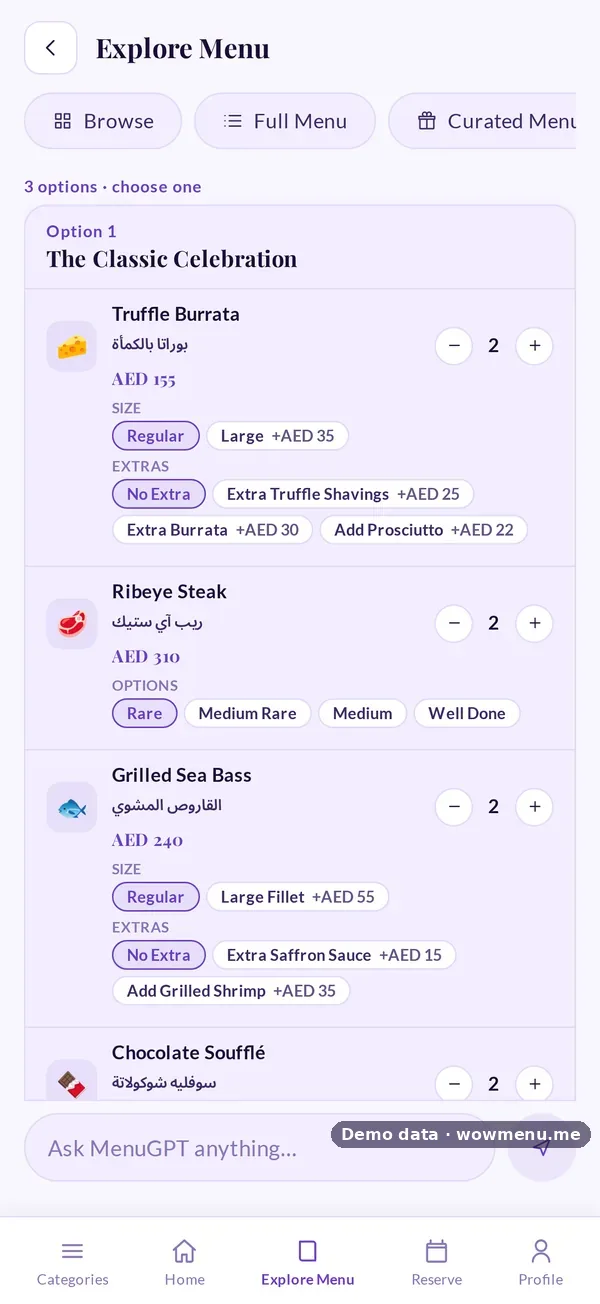
Guests no longer accept waiting to catch someone's eye just to place an order. They expect to decide at their own pace and order the moment they are ready, then order again without starting over.
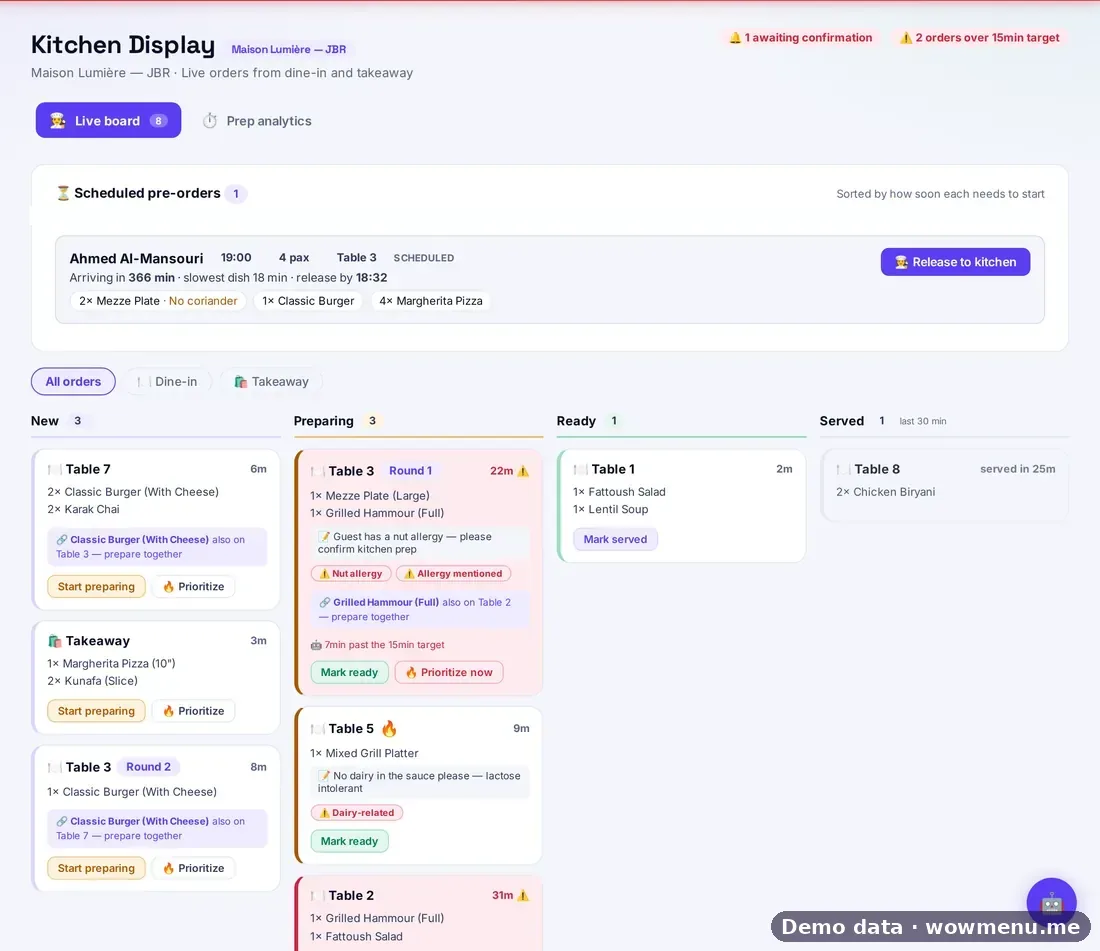
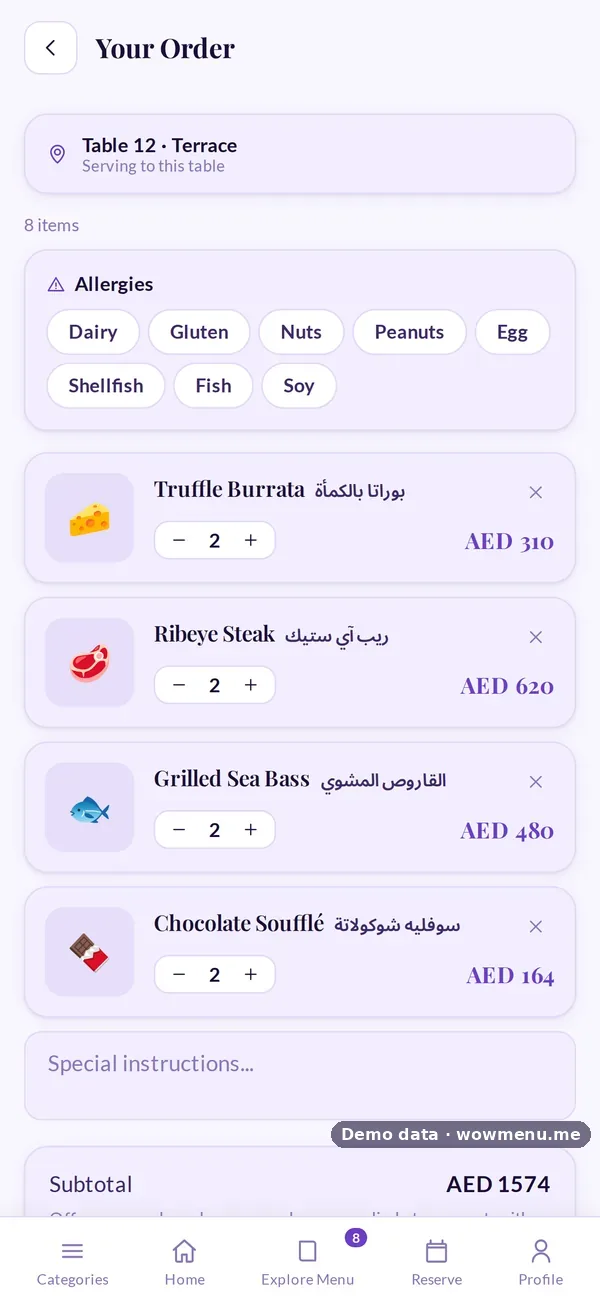
What it means for you: a QR ordering system where each table orders and re-orders from its own phones, with every round grouped on the kitchen board. Your servers stay, and spend their time on hospitality instead of note-taking.
2. "Show me the menu in my language"
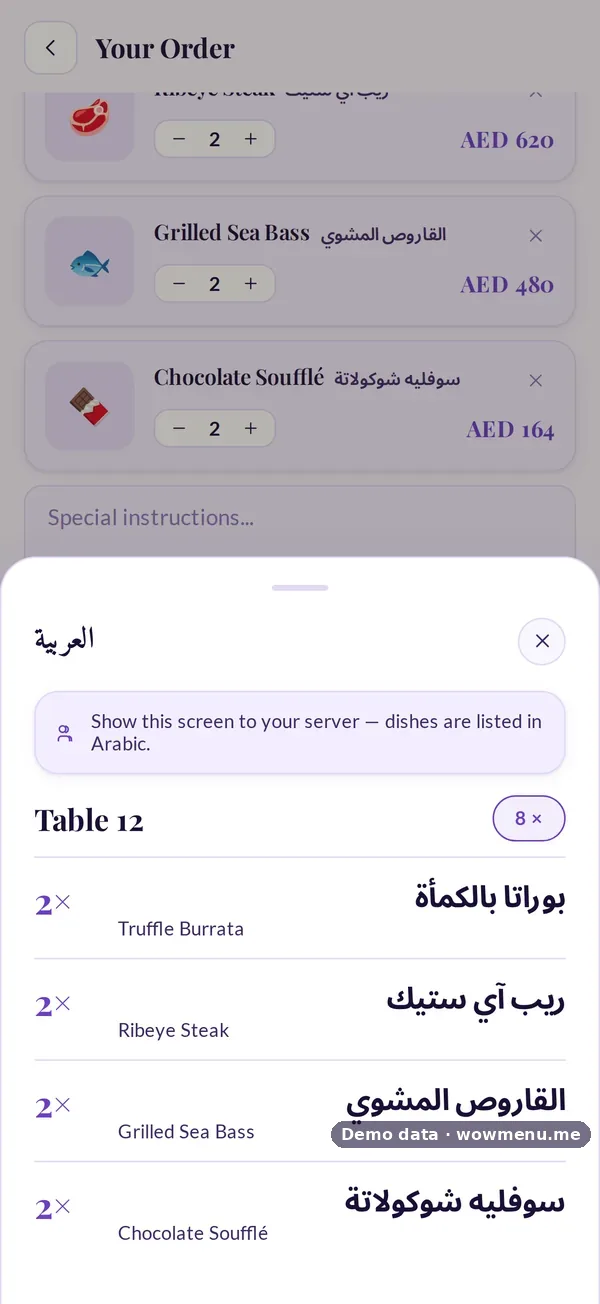
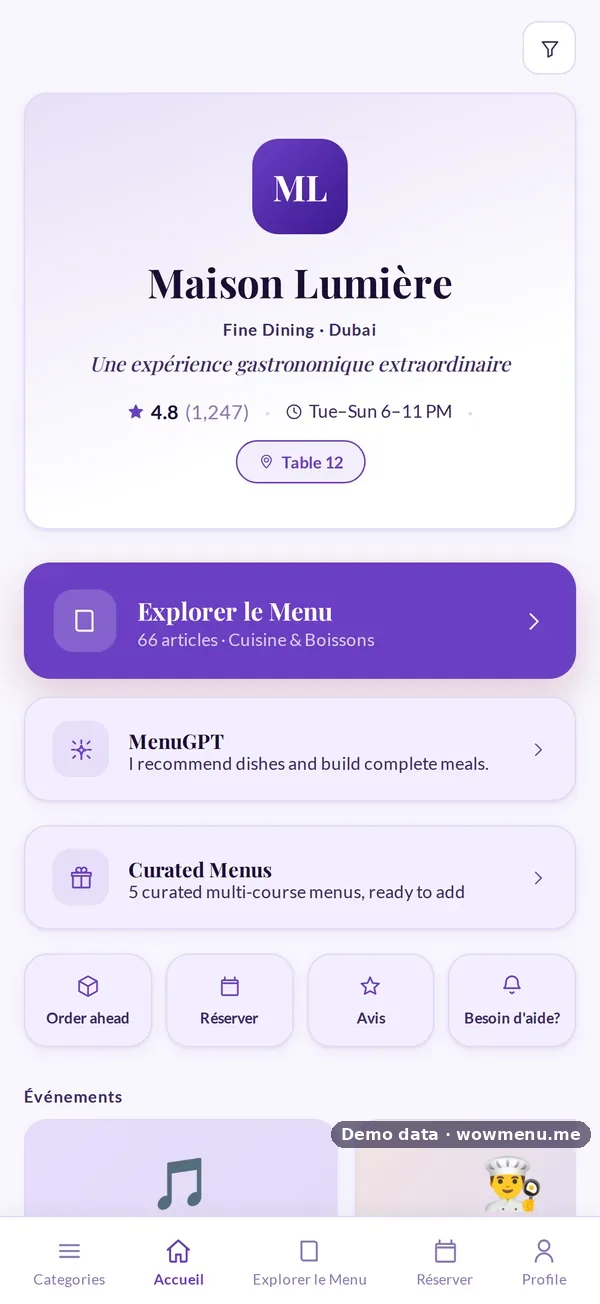
In a dining room with visitors and residents from many countries, a guest reading in a second language orders defensively: the dish they recognise, not the one they would have chosen.
What it means for you: a menu that switches language in one tap, with Arabic laid out properly right to left, and a recommendation assistant that answers in the same language. WowMenu offers 27 menu languages, filled with Auto-translate for you to review. More on multi-language menus.
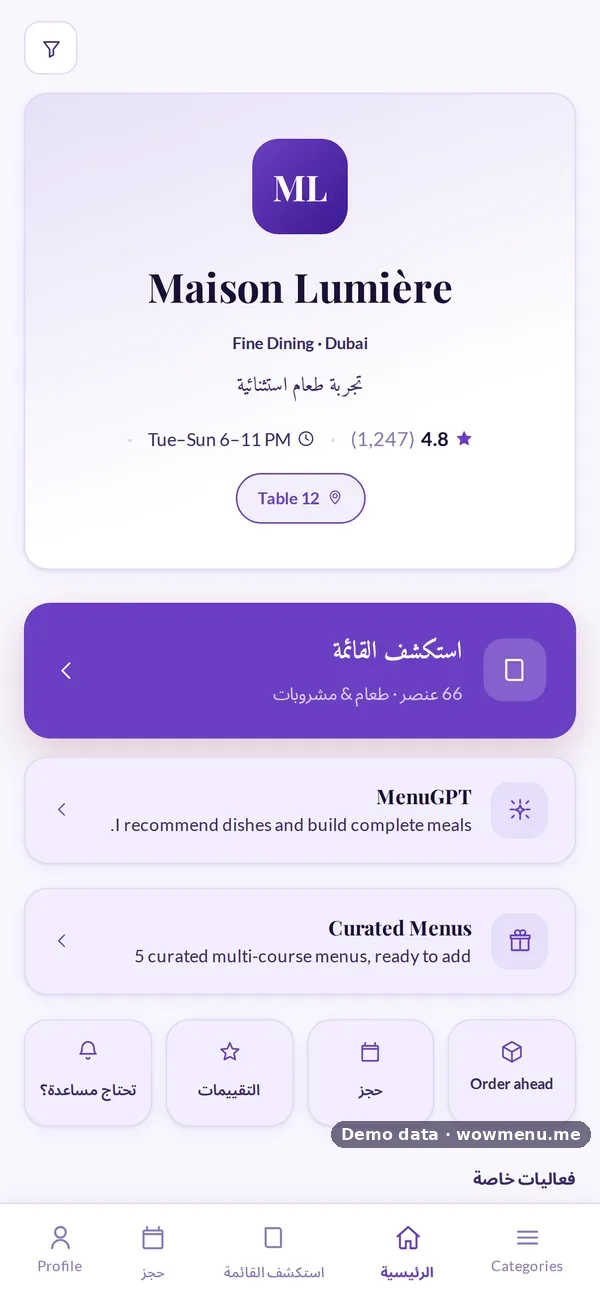
3. "Tell me what's in it"
Dietary choices and allergies are part of ordering now, not an awkward question at the end. Guests expect to filter the menu and see what each dish contains.
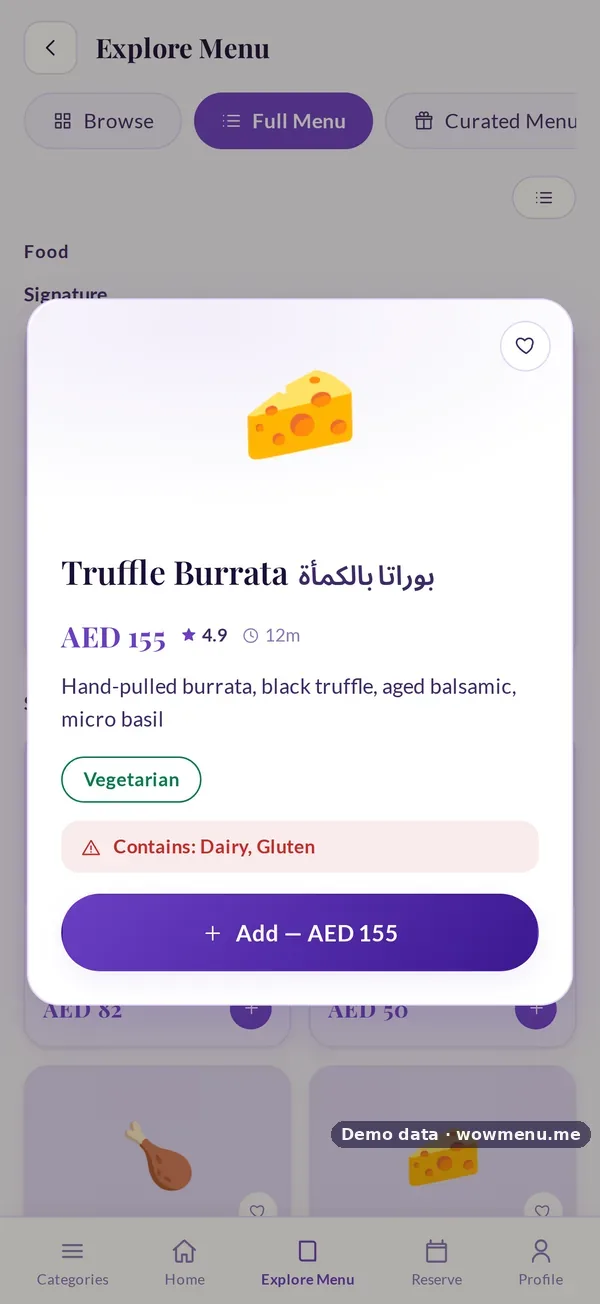
What it means for you: dietary tags and allergens on every dish, filters across the menu, and allergies that travel with the order to the kitchen. Allergen information is a prompt for your team, not a guarantee, so staff should always confirm. How allergen information should work.
4. "Help me choose"
Faced with a long menu, many guests want a suggestion rather than a list. They would ask a great server; increasingly, they expect the menu to help too.
What it means for you: recommendations that build complete options for the table, from your real menu. On WowMenu that is MenuGPT, which suggests add-ons after the guest chooses and never recommends a dish you have sold out of.
5. "Let me pay when I'm ready, and split it"
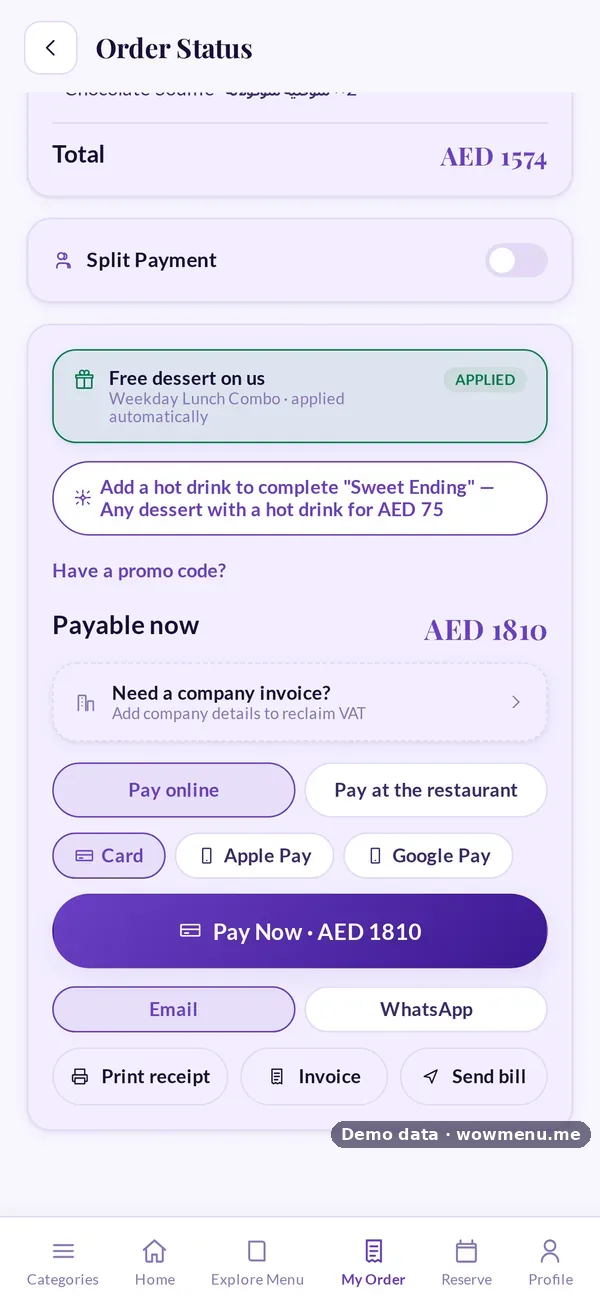
Waiting for the bill is one of the most common complaints. Splitting it between friends is a close second.
What it means for you: paying from the table, online or to staff with a payment reference, splitting equally or by custom amounts, and a company invoice for guests who need one. How restaurant payments work on WowMenu.
6. "Remember me"
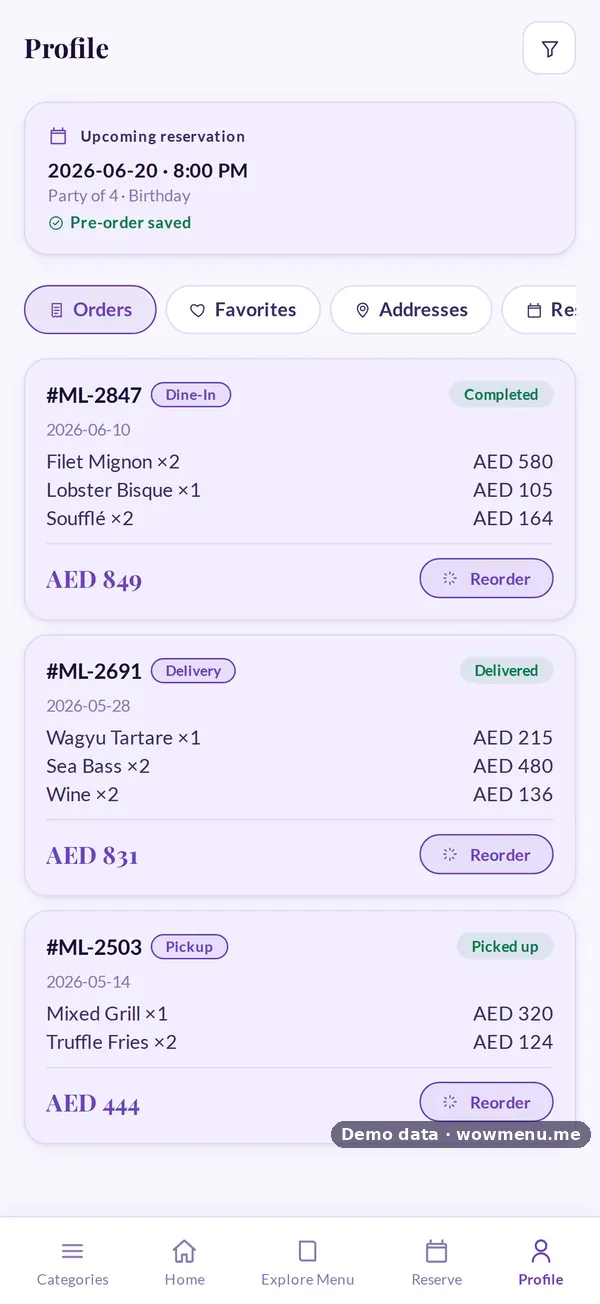
Regulars want to be recognised: their allergies, their usual table, the dish they always order. Being asked the same questions on every visit tells them they are not known.
What it means for you: a guest profile that remembers preferences and allergies, flags matching dishes, and lets a regular reorder in one tap. Your team sees the same profile at the table.

7. "Make loyalty worth it"
A stamp card in a drawer is not loyalty. Guests expect rewards they actually want, progress they can see, and offers that respect them rather than chase them.
What it means for you: points with a clear value, tiers and perks, rewards such as a free dessert or priority seating, and win-back messages only for guests who opted in. See how loyalty works.
The common thread
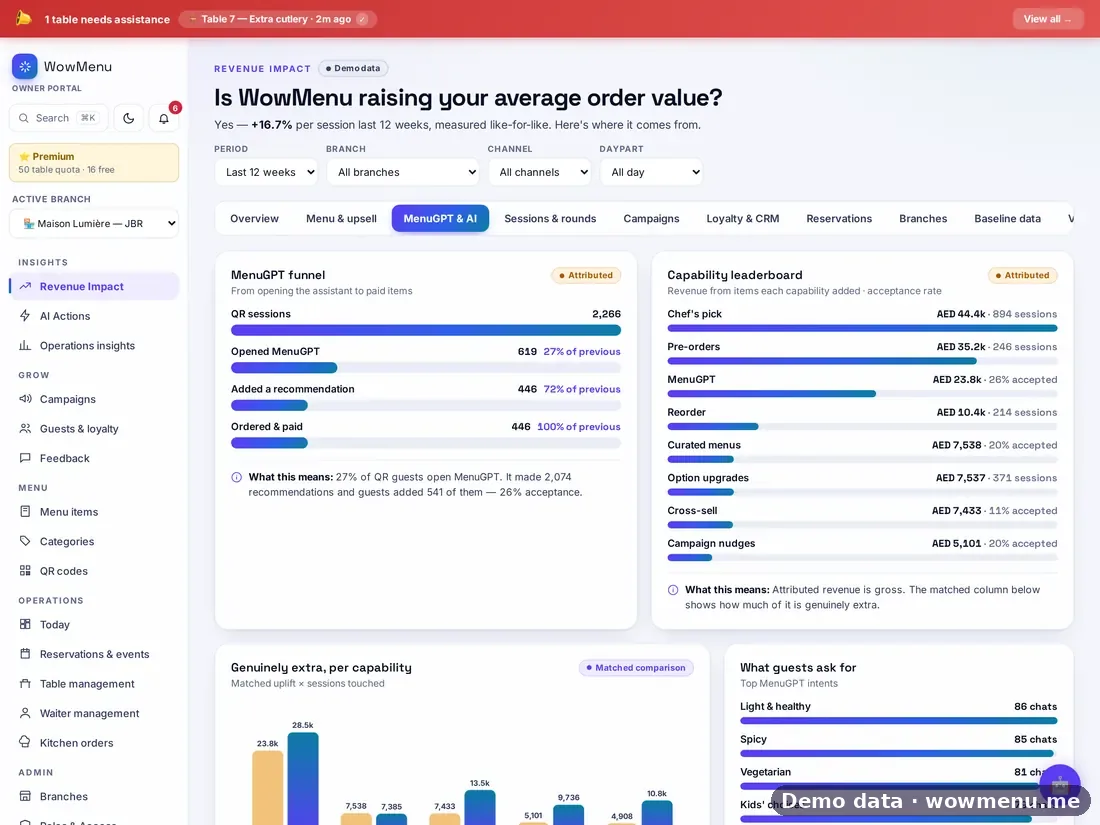
None of these expectations is about technology for its own sake. Each removes a wait, a doubt or a repeated question. Restaurants that remove them give guests more reasons to stay longer, order more confidently and come back. To see what that adds to your own numbers, Revenue Impact compares each week with your baseline.